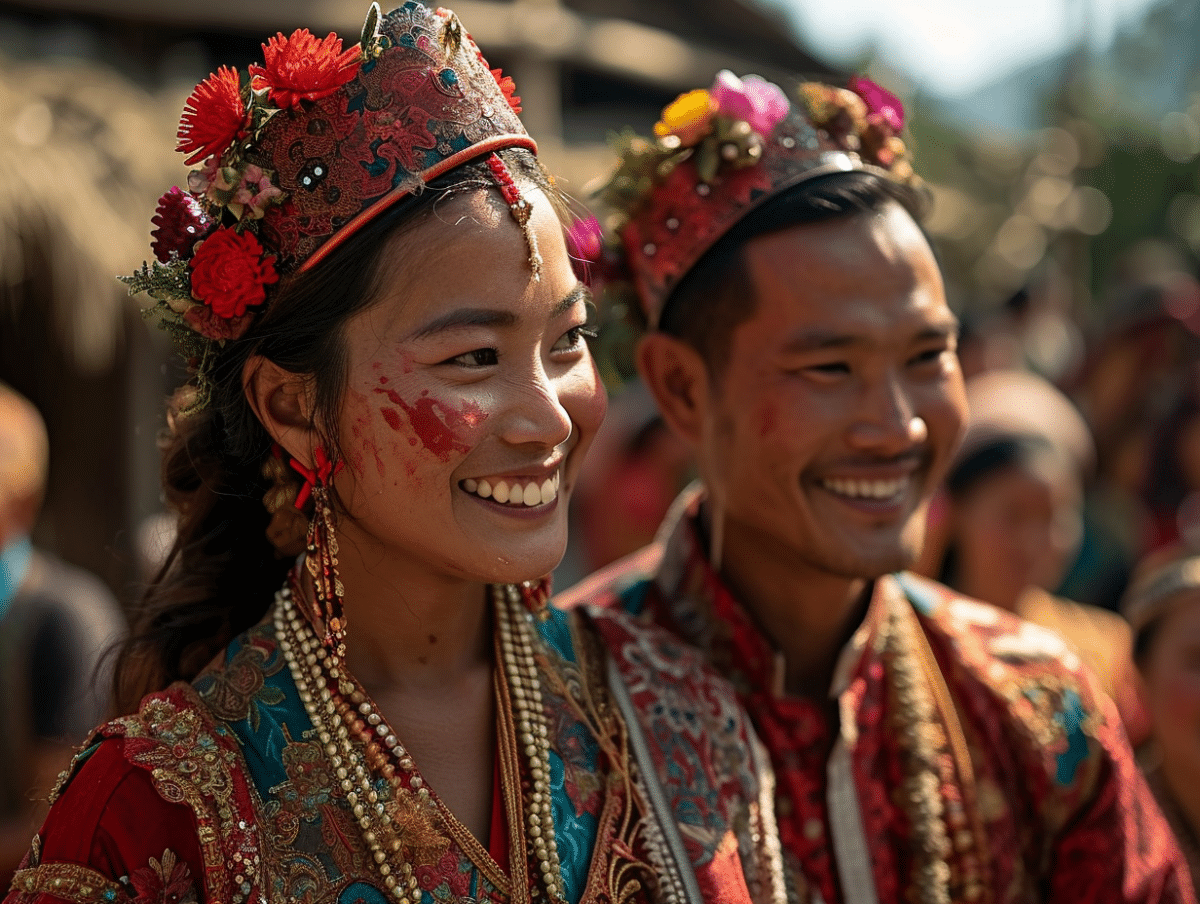
Weddings are unique celebrations where two stories intertwine to form one. Family traditions, often cherished and passed down from generation to generation, can enrich this event by adding a personal and meaningful touch. Integrating these customs is not only a tribute to the past but also a way to forge bonds and create memories that will last. Whether it’s a specific dance, a symbolic ritual, or a family recipe served at the meal, these traditional elements infuse soul into the celebration and honor the roots of the couple.
Customizing Traditions: How to Adapt Them to Your Couple
In the quest for a wedding that authentically reflects the uniqueness of each union, adapting traditions proves to be a process as delicate as it is necessary. Take, for example, the wedding dress, which, while being a universal symbol of marriage, can be reinterpreted to match personal tastes. The tradition of the procession can be reshaped to better align with the spirit of the ceremony, by choosing vehicles that hold special significance for the couple or altering the route to pass through places rich in their shared history.
Adapting traditions does not mean renouncing them, but rather reinventing them. The four elements – something old, something borrowed, something new, and something blue – can be chosen not only for their sentimental value but also for their ability to tell a story, that of two people coming together. Similarly, the bouquet toss could transform into a more inclusive sharing moment, where every single person, man or woman, could try their luck. And if the couple does not resonate with the traditional offering of sugared almonds, why not opt for an alternative that speaks more to their guests?
Examining traditions from the perspective of their meaning offers new insights. Wedding customization invites reflection: what does ‘sleeping separately’ the night before the big day represent for you? Is it a way to mark the transition between two stages of life or an outdated practice? According to a study by ‘123 Mariages’, many couples now choose to spend this moment together, thus reinventing the tradition into a moment of pre-nuptial intimacy. The garter, on the other hand, can be abandoned, modernized, or even turned into a playful game, depending on the couple’s desire to perpetuate this old custom. It is in this spirit of reflection and creativity that wedding traditions, far from being relics of the past, become the fertile ground for a shared future.
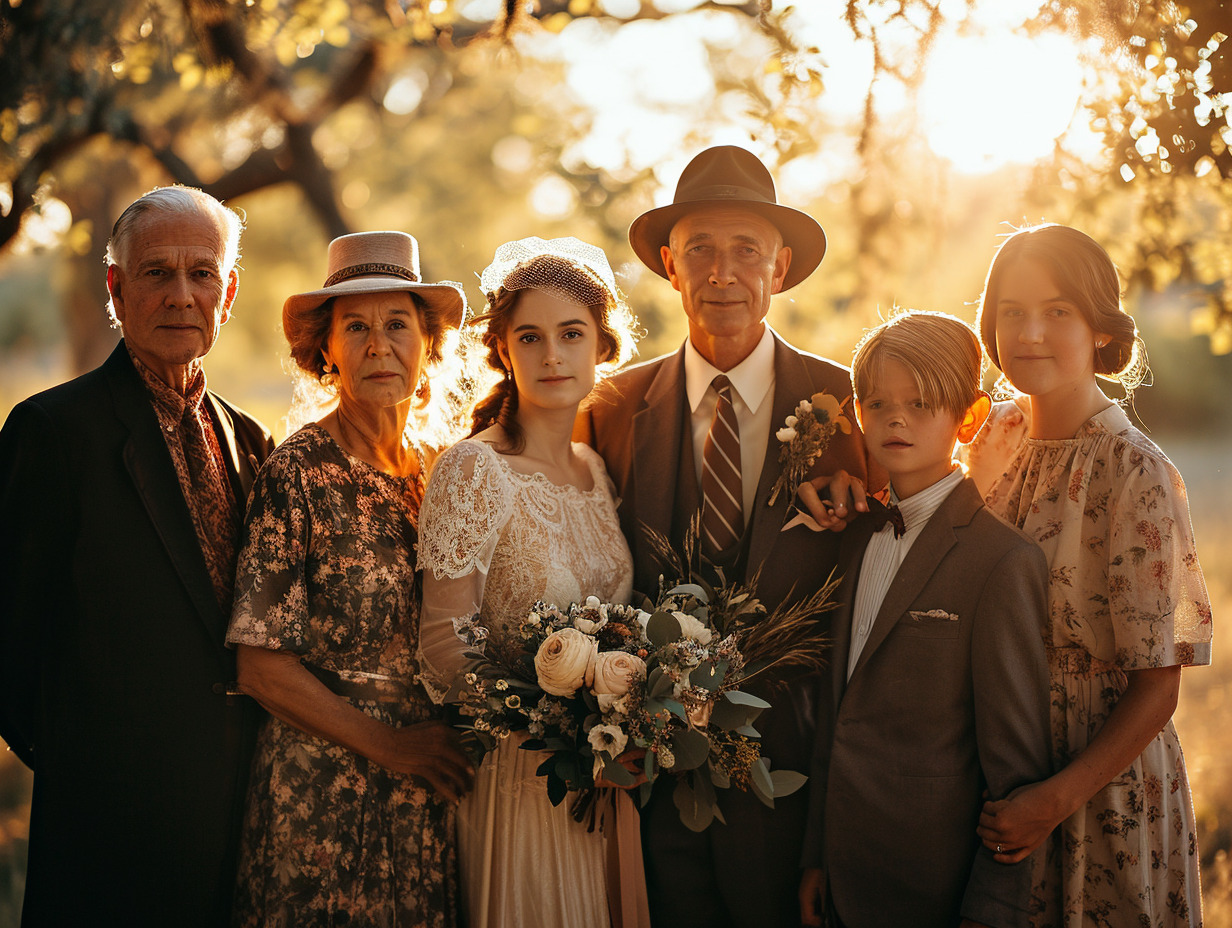
Creating New Traditions: The Union of Two Family Heritages
When two people decide to unite their lives, they also bring with them the richness of their family heritages. The occasion is therefore ideal to create new traditions that will celebrate this unique fusion. Take the ‘chamber pot’, a somewhat outdated tradition, which can be transformed into a more contemporary ritual symbolizing the transition to married life rather than adulthood. Similarly, the ‘onion soup’, traditionally served at the end of the evening to revive guests, can be reinvented as a gourmet dish reflecting the culinary preferences of the couple or their shared history.
The tradition of ‘carrying the bride’ also offers a blank canvas for imagination. Historically, it served to prevent the bride from stumbling, a bad omen. Today, this gesture can transform into a symbolic act of mutual support, where roles can even be reversed. The union of heritages thus materializes in the creation of new practices, establishing bridges between the cultural legacies of both families. It is a process of co-construction where each partner breathes life into customs that may be passed down to future generations.
The integration and reinvention of family traditions into the wedding ceremony are not merely nostalgic gestures. They constitute an act of ongoing creation, where the couple weaves together the fabric of their shared cultural heritage. This heritage, enriched by each person’s contributions, becomes a personalized legacy, an indelible mark of their union in the collective memory of their families.