
A t-shirt labeled L at a French store has a chest measurement of 102 cm. The same L purchased on an American site corresponds to a 40 US, while in the United Kingdom it translates to a 42. These three garments carry the same letter, but their actual measurements differ by several centimeters.
The size L in clothing does not rely on any unified legal standard. French and European regulations require the mention of composition and care, not a size chart. The L = 40/42 or L = 50/52 tables remain market practices, which explains the persistent discrepancies between brands and countries.
Size L for men and women: equivalence table by country

The first reflex before making a purchase is to identify the sizing system used by the brand. Here are the most common correspondences for size L, according to gender and geographical area.
| System | Women (L) | Men (L) |
|---|---|---|
| France / Europe | 40/42 | 50/52 |
| United States (US) | 10/12 | 40 |
| United Kingdom (UK) | 14/16 | 42 |
| Italy | 46/48 | 50/52 |
To know precisely what size L corresponds to, you need to cross-reference the letter with the system of the country of origin of the garment. A 42 UK women’s size has nothing to do with a 42 French size.
The discrepancies between the Italian and French systems remain small for men. However, for women, the American system significantly shifts the numbering: a 10/12 US can be misleading when viewed with European benchmarks.
Actual measurements behind an L: chest, waist, and hips
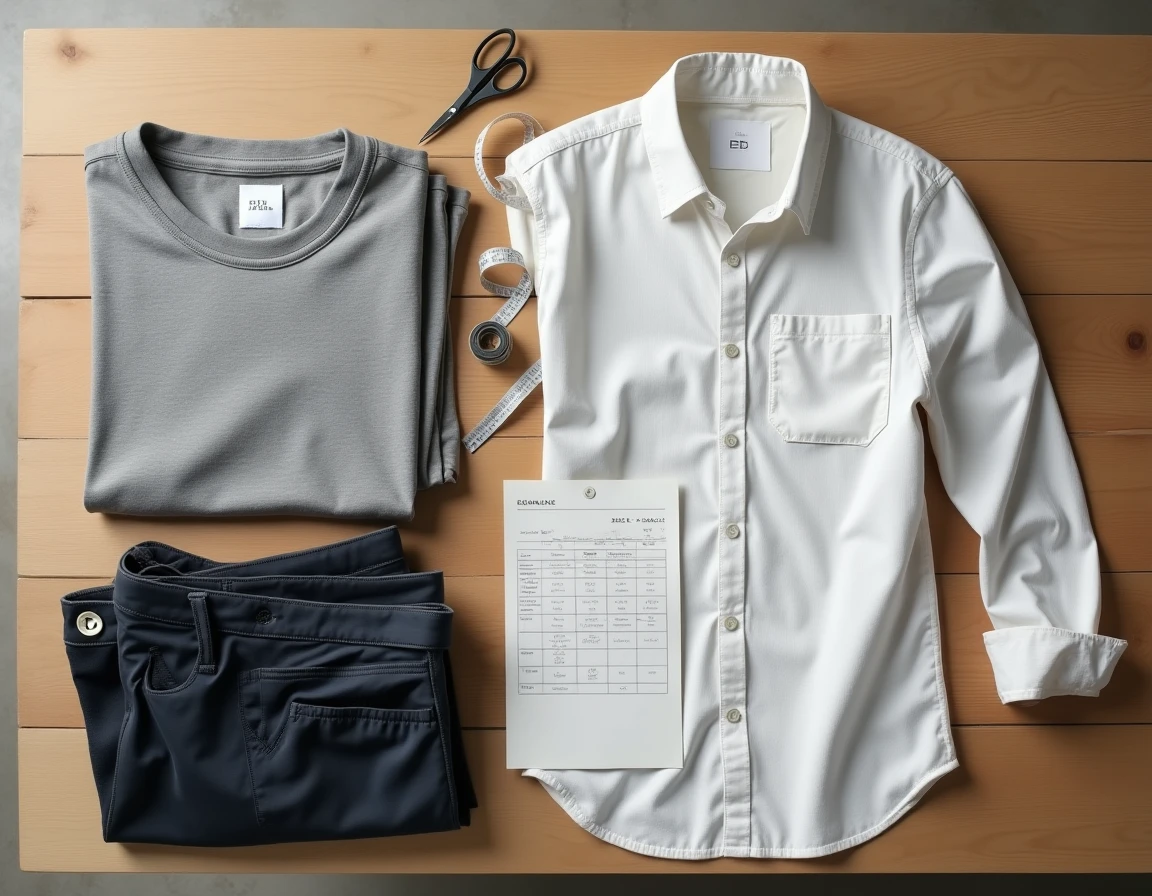
The numbers in a conversion table are not enough. What determines the actual fit of a garment are the body measurements in centimeters.
Benchmarks for women
A women’s L in France generally targets a chest measurement around 96 to 100 cm, a waist measurement of about 78 to 82 cm, and a hip measurement of 104 to 108 cm. These ranges vary from one brand to another, sometimes by two to three centimeters.
Benchmarks for men
The chest measurement for a men’s L is around 102 cm in France. The waist measurement usually falls between 86 and 90 cm. For pants, the inseam length also comes into play, but it is not related to the letter L: it depends on the short or long variations offered by certain brands.
Taking measurements with a tape measure remains the most reliable method. Measure the chest at the widest point, the waist at the natural dip (above the navel), and the hips at the fullest point.
Vanity sizing and tall, petite, curve variations: why an L no longer equals an L
For several years, many brands have practiced vanity sizing. The principle: associate a given body measurement with a size smaller than it would have been previously. A body that wore XL ten years ago now finds itself in L, without any change in measurements.
This subtle shift makes theoretical equivalence tables increasingly unreliable. Two garments labeled L can differ by four to six centimeters in chest measurement, depending on the brand’s policy.
Conversely, some brands (notably in sports and ready-to-wear) have introduced specific ranges that overlap with the classic size L:
- L Tall: extended sleeves and torso length for taller silhouettes
- L Petite: shortened proportions for shorter individuals, without altering the chest measurement
- L Curve or L Plus: adjustments for hips and waist for rounder body types, often with a chest measurement exceeding the standard L
These variations do not appear in general conversion tables. They add an additional dimension that the simple letter L cannot capture.
Online size recommendation tools: what they change for L
Major online retailers now integrate recommendation tools based on artificial intelligence (Fit Finder, True Fit, among others). These algorithms compare your measurements or your usual size in other brands to automatically suggest the right match.
The operation relies on a cross-referenced database. You indicate that you wear an M in brand A, and the tool determines whether you should order an L or stay in M with brand B. This approach significantly reduces the return rate related to size errors.
These tools do not replace taking measurements. They remain dependent on the quality of the data provided by the brands. If a brand has changed its size chart without updating the references, the recommendation may be skewed.
- Provide your actual measurements rather than a usual size, which may vary by brand
- Check the size guide specific to each brand before confirming the algorithm’s suggestion
- Compare the recommendation with the manufacturer’s conversion table to spot any inconsistencies
The manufacturer’s size guide always takes precedence over the automatic recommendation. The tool is a useful filter, not a guarantee.
The letter L remains a starting point, not a measurement. Between discrepancies between countries, vanity sizing, and morphological variations, only your measurements taken with a tape measure allow you to choose the right size when shopping online. Consulting the size guide of each brand, even for a familiar retailer, avoids most unpleasant surprises.