A renovation project fails one in two times due to lack of planning or anticipation of unforeseen events. Contrary to popular belief, the most sophisticated tool does not compensate for poor organization. Certain steps, often overlooked, transform a simple assembly into a sustainable achievement.
Updated digital resources now allow us to avoid the most common mistakes and optimize the time spent on each task. Concrete advice facilitates access to reliable methods, suitable for all levels of experience.
Why getting into DIY at home really changes the game
DIY shakes up habits and redefines the relationship with one’s interior. Tackling work at home is not just about handling a drill or installing a shelf: it’s also about shaping a space to fit one’s needs while keeping an eye on expenses. Designing a piece of furniture tailored to a narrow room, installing custom storage, means gaining comfort and stepping into the world of accessible custom solutions. DIY projects meet needs where standard offerings clash with daily constraints. Making a coffee table from pallets or transforming glass bottles into lamps is inventing a unique solution for every corner of the house.
Reusing what we already have, repurposing everyday materials, is adopting an eco-friendly approach that lightens the bill and gives meaning to every action. Pallets turn into sturdy furniture, bottles become decorative accessories, and little by little, the house fills with objects that tell a story. This creative recycling limits waste and allows one to leave a personal mark in every arrangement.
By focusing on well-thought-out storage that fits the family’s rhythm, we free up space and make life easier. Solutions imagined at home, often inspired by DIY, eliminate clutter and simplify daily life. Repairing instead of replacing also helps keep control over expenses and provides the satisfaction of a job well done. Even simple repairs at home relieve the wallet while boosting confidence in one’s abilities.
To feed your inspiration and quickly take action, visiting the Bobo Le Brico website offers a rich source of ideas and advice. You can find experiences shared, practical tips, whether to transform your living room or to arrange a balcony. DIY is not reserved for experts: everyone can get started, as long as they want to make their home a lively, evolving place that reflects them.
What pitfalls to avoid and what tips make a difference in daily life?
Anticipate, organize, secure
Nothing dampens enthusiasm more than searching for an elusive screw or tripping over a forgotten tool on the floor. The organization of the workspace makes all the difference. To gain efficiency, equip yourself with a complete, well-maintained toolbox, and assign a specific place for each item. Floating shelves and glass jars are perfect for sorting screws, plugs, and small supplies. This rigor in storage from the start avoids disappointments and speeds up project progress.
Choose quality over quantity
Accumulating entry-level tools often ends up costing more: ineffective equipment, frustration, approximate results. It’s better to invest in a few reliable pieces, even if it means acquiring them gradually: tape measure, level, drill, screwdriver, saw, not to mention gloves and safety glasses. For each task, prefer the tool suited to it, even if it means waiting a bit to complete your arsenal.
Here are some reflexes to adopt for DIYing with peace of mind:
- Take safety seriously: gloves, glasses, and a clear space are your allies at every stage.
- Whenever the project involves electricity or structure, consult a competent professional to avoid any risk.
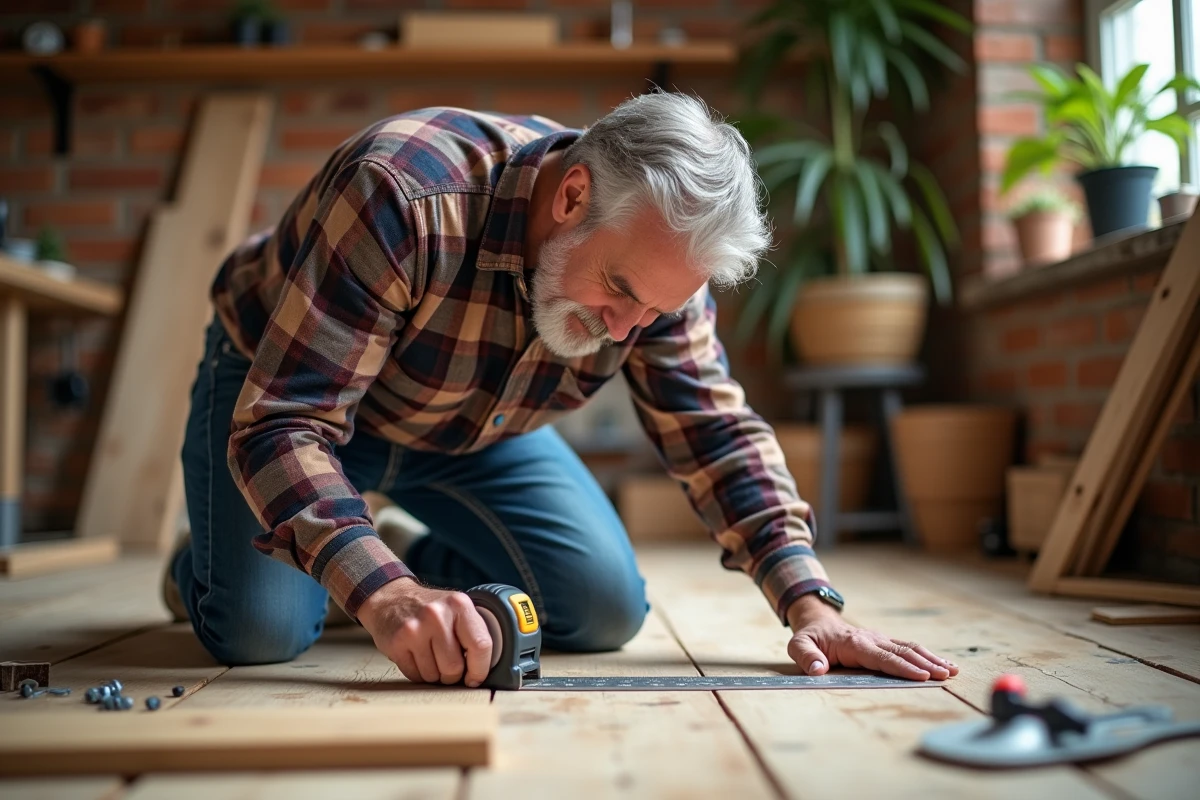
The community is the best accelerator of progress. Forums, exchanges of tips, detailed tutorials help avoid pitfalls and adapt methods to one’s own constraints. Watching a tutorial before diving in allows you to anticipate difficulties and correct course at the right moment. Get into the habit of measuring, marking, and checking each step. Always plan for a margin for the unexpected: it’s the best way to avoid fatigue and achieve precise results. DIYing means accepting to learn, to fail sometimes, and to adjust until you get what truly suits you.

Essential resources and practical tips for easy progress
To improve your technical skills and successfully carry out your DIY projects, multiply your learning sources: detailed tutorials, online courses, practical guides. Digital resources facilitate the learning process, whether you’re installing a shelf or assembling a DIY furniture piece from pallets. Tutorial videos break down each step, making accessible tasks that seemed out of reach. From smart storage to fixing a leak, everything becomes possible with a little visual support.
The transmission of know-how also relies on experts. Christian Pessey, a reference in practical guides, combines sharp advice on safety, tool selection, and material use. Élise Malécot-Bourdelle, an eco-advisor, advocates for engaged DIY: she promotes creating lighting or storage solutions with pallets or recovered bottles. Camille Jouanne, on the other hand, focuses on decor tips and clever storage, often using recycled materials.
To enrich your experience and find suitable solutions, rely on these different channels:
- Specialized forums prove invaluable for obtaining precise answers, sharing successes as well as challenges, and exchanging practical advice.
- Social media is an endless source of ideas, experiences shared, and tips provided daily by the community.
By combining online resources, expert feedback, and collective dynamics, DIY becomes accessible to everyone, regardless of the project. At each stage, identify the appropriate resource: a tutorial for a technique, a advice sheet for choosing a tool, or a testimonial to anticipate an obstacle. Each achievement brings its share of satisfaction and transforms the home, one action at a time. The next time a wobbly piece of furniture threatens the balance of the living room, you’ll know where to find the answers, and most importantly, how to take action.