
This year’s high-tech trends are measured less by their novelty than by their real impact on daily usage. With the arrival of chips dedicated to artificial intelligence in laptops, a European regulatory framework reshuffling the cards, and connected objects gaining autonomy, several technological mutations deserve close attention due to the data they produce.
PCs equipped with NPU and local AI: platform comparison
The shift towards AI executed directly on the device, without going through the cloud, is the most significant hardware change of this period. Intel, AMD, and Qualcomm have each launched ranges of processors integrating a NPU (Neural Processing Unit) capable of locally managing image generation, text summarization, or real-time translation.
| Platform | Manufacturer | Local AI Functions | Copilot+ PC Compatibility |
|---|---|---|---|
| Core Ultra | Intel | Image generation, summarization, offline translation | Yes |
| Ryzen AI | AMD | Image generation, summarization, offline translation | Yes |
| Snapdragon X Elite | Qualcomm | Image generation, summarization, offline translation | Yes |
Microsoft has formalized this movement with the Copilot+ PC platform, which sets minimum NPU power requirements. In practice, a user can summarize a multi-page document or translate a video conference without an internet connection. The data remains on the machine, reducing dependence on the cloud and privacy-related issues.
The difference from the simple “AI” marketing of previous years lies in this local execution. Processes that previously required a server round trip are now completed in seconds on the workstation. To keep up with the evolution of these technologies over the months, the MaxiScoop tech site regularly details benchmarks and new models available.

European AI Act: what the regulation changes for tech products
The European Union adopted the AI Act in spring 2024, with a gradual implementation until 2026-2027. This text directly modifies how manufacturers and publishers design their products for the European market.
Three main obligations emerge from the regulatory framework:
- Transparency on AI-generated content: any text, image, or audio produced by an artificial intelligence system must be identifiable as such by the end user.
- Documented management of biases: companies must prove that they have tested and corrected biases in their models before market release.
- Classification by risk level with enhanced obligations for so-called “high-risk” systems, particularly in health, recruitment, or surveillance.
For consumers, this translates into stricter AI modes and integrated audit logs in software and devices. A voice assistant or text generation tool sold in Europe must include these safeguards from its design. Products that do not comply risk simply not being marketed in the territory.
Concrete impact on innovation
This legal framework does not hinder technology; it channels it. Publishers that anticipate compliance gain a competitive advantage in the European market. In contrast, startups developing generative AI models without documentation on biases or without traceability mechanisms face a regulatory wall.
Connected objects and cybersecurity: converging issues
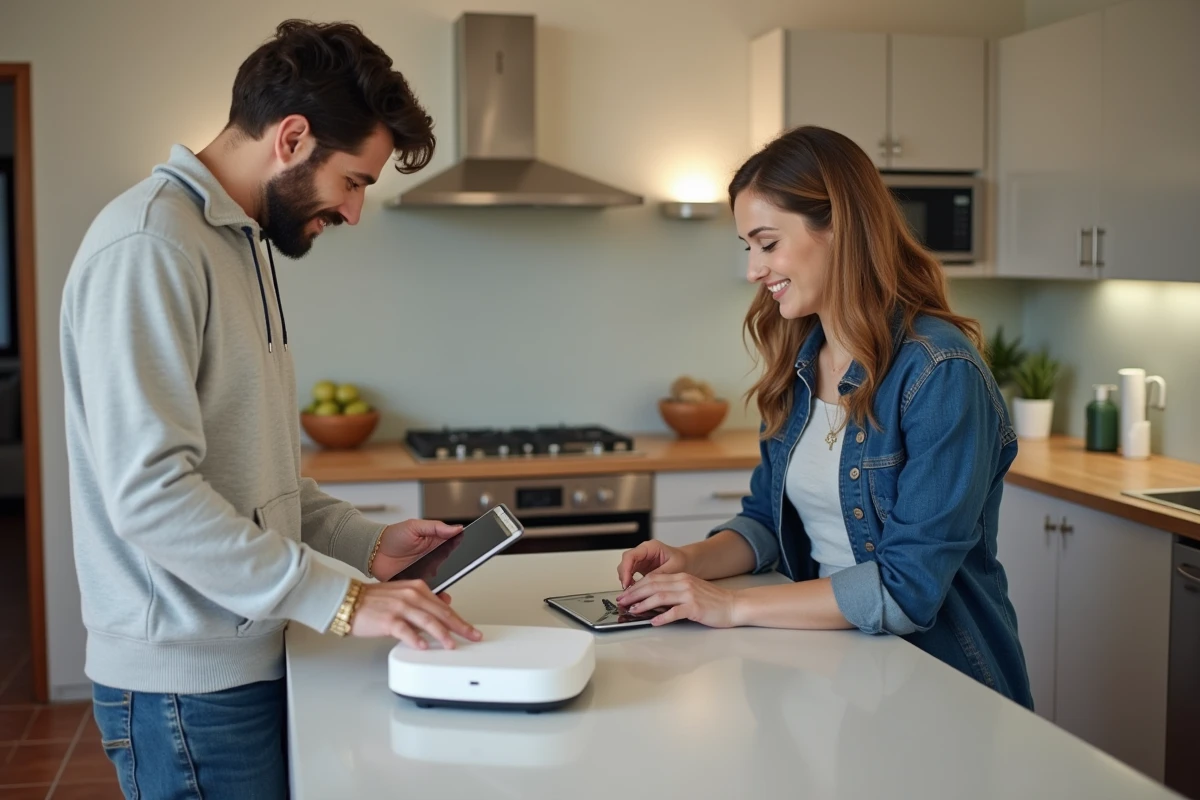
The number of connected objects in households continues to grow, from Bluetooth speakers to smart home sensors and domestic robots. This proliferation poses a cybersecurity problem that manufacturers are beginning to address seriously.
Each connected object represents a potential entry point into the home network. A poorly secured wireless speaker or a temperature sensor with outdated firmware is enough to compromise the entire network. Security standards are evolving accordingly, with automatic updates and enhanced encryption protocols on recent devices.
Domestic robots and decision-making autonomy
Multifunctional robots are gaining embedded processing capabilities. Again, the trend aligns with that of PCs: artificial intelligence is migrating to the device itself. A recent robotic vacuum maps its environment, identifies obstacles, and adjusts its trajectory without sending data to a remote server.
This local autonomy comes at a cost in terms of price. Models equipped with an embedded AI chip remain significantly more expensive than their cloud-connected counterparts. The trade-off between local performance and budget remains a central choice criterion for consumers.
Digital and data: the question of technological sovereignty
Dependence on foreign cloud infrastructures, particularly Chinese and American, fuels a debate on digital sovereignty in Europe. The deployment of data centers on the territory and the development of sovereign cloud solutions are among the technological axes closely monitored this year.
The issue is not only political but technical: latency, GDPR compliance, and system resilience directly depend on the location and governance of infrastructures. Companies handling sensitive data (health, finance, defense) are now weighing raw performance against legal guarantees regarding their data processing.
The current year draws a clear line in the tech sector. On one side, AI computing power is physically moving closer to the user, in their devices, connected objects, and robots. On the other side, the European regulatory framework sets limits that will filter the products accessible on the market. These two dynamics, material and legal, will determine the innovations that move from prototype to real use.