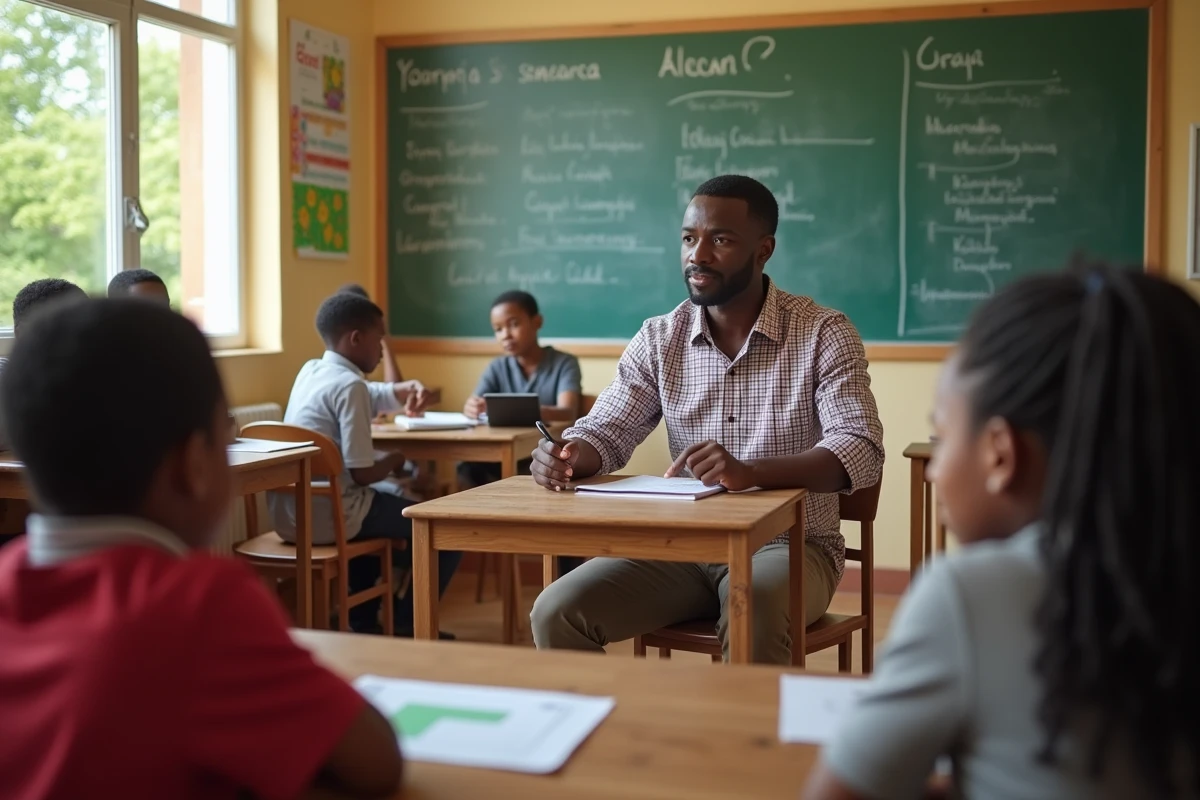
Less than 40% of schools in sub-Saharan Africa have access to the Internet, while online learning platforms are multiplying across the continent. Teachers often find themselves juggling innovative digital resources and limited infrastructure, creating significant gaps in access to tools and educational content.
What is the state of digital education in Africa? A mixed picture
In major African cities, connectivity is improving, but the landscape remains fragmented. Capitals see their networks becoming more stable, while large rural areas remain largely outside the digital game. Infrastructure struggles to keep up with the influx of new students and the pressure to access the Internet. As a result, less than half of schools have regular access to the web, a heavy barrier for all those aspiring to modernize education.
Yet, across the continent, thousands of students are discovering new ways to learn thanks to the emergence of online courses. These tools, often supported by local platforms or associations, pave the way for unprecedented teaching practices. Teachers are gradually embracing these resources, even where resources are scarce. However, this transformation highlights strong disparities, both between countries and among schools within the same region.
One major issue dominates: making equitable access to these digital resources possible. Governments, NGOs, and private actors are engaging in plans to connect more schools and train teachers in these new uses, including the integration of artificial intelligence into educational content. This transition is not without its challenges, but it is accompanied by a collective momentum to ensure that innovation is no longer reserved for a minority.
Some sites, like sankore.org, illustrate this movement towards openness. The tools available there encourage sharing, local adaptation, and the evolution of teaching practices. Digital education in Africa is progressing, driven by an energy of innovation, but it must contend with very different realities from one territory to another.
What challenges do teachers face with the integration of digital technology in the classroom?
The digital divide is a daily reality for African teachers. In many schools, Internet access remains erratic, digital infrastructure is fragile, and suitable equipment is sorely lacking. Add to this frequent power outages, and you have a challenging environment. Despite these obstacles, the will to move forward remains palpable.
To harness new tools, specific skills are required. Many teachers are calling for time to train, support, and guidance. However, on the ground, reality varies greatly: in some rural areas, training programs struggle to get started. The education system navigates these differences as best it can while trying to encourage innovation.
Here are some of the concrete challenges they face:
- Developing digital uses that are adapted to their pedagogy
- Adapting content to local languages and realities
- Dealing with widely varying levels of equipment among students
- Facing educational policies that are sometimes too centralized or unsuitable
In this context, many teachers are becoming everyday inventors, crafting solutions to move forward. Their pedagogical creativity is expressed in every connection found or resource shared. The gap between urban and rural areas sometimes widens, but innovation continues to gain ground, step by step.
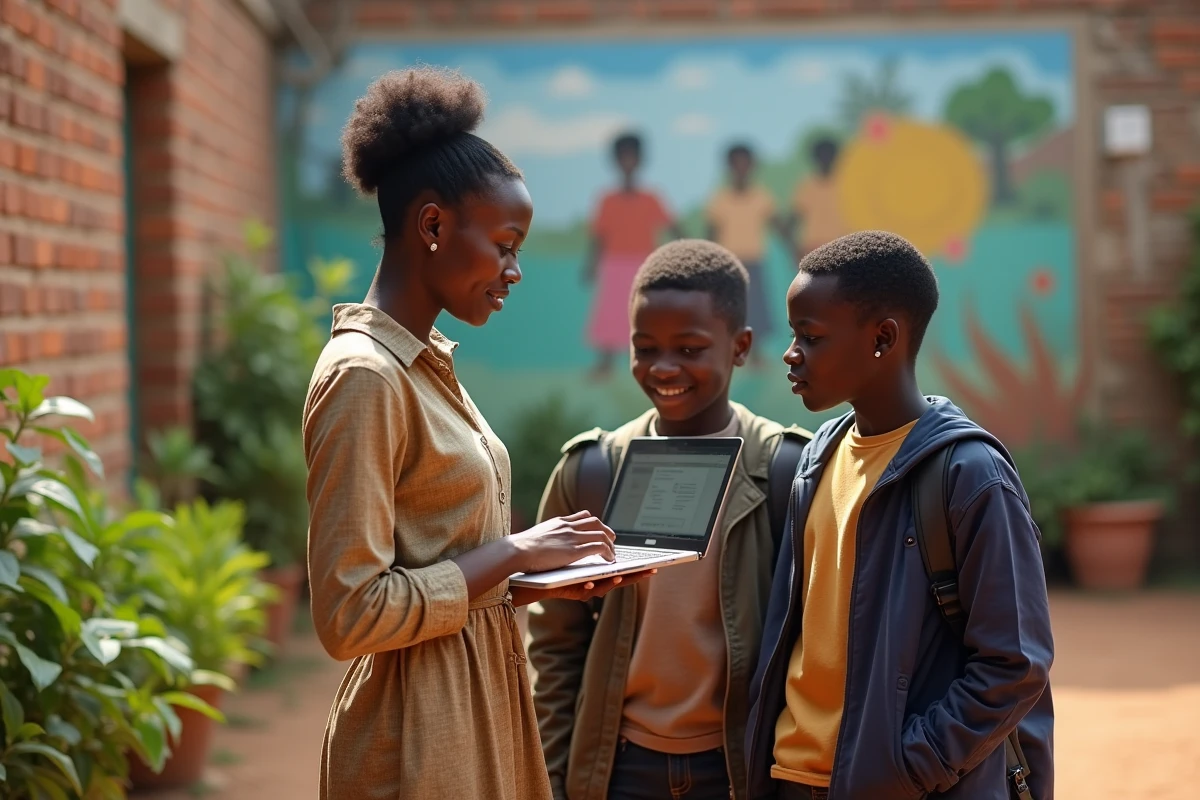
Collaborate, innovate, share: the resources and initiatives that are transforming African education
The sharing of digital resources is gaining momentum in Africa. Open platforms provide a variety of educational content, interactive tools, and guides designed for local realities. This dynamic relies on cooperation among teachers, often driven by the urgency to provide concrete solutions. The goal is clear: to pool knowledge, address the lack of infrastructure, and enable everyone to strengthen their skills.
Ongoing training is organized around support networks and hybrid systems. Workshops, webinars, communities of practice: these sharing spaces allow for the exchange of methods and ideas to integrate digital technology into the classroom. Collective intelligence thrives, fueled by the commitment of local actors, NGOs, and collectives mobilized to rethink education on the continent.
Several types of resources are gradually establishing themselves, each with its advantages:
| Type of resource | Benefits |
|---|---|
| Digital educational content | Adaptation to local contexts, simplified access for teachers |
| Interactive tools | Stimulating student participation, personalized learning |
| Exchange communities | Sharing practices, strengthening skills |
The African Union’s strategy focuses on developing skills and the gradual integration of educational technologies into public policies. Artificial intelligence is making its way into experiments, opening up new perspectives. Each advancement, each initiative contributes to shaping a digital education rooted in African realities, inventive and resolutely forward-looking.