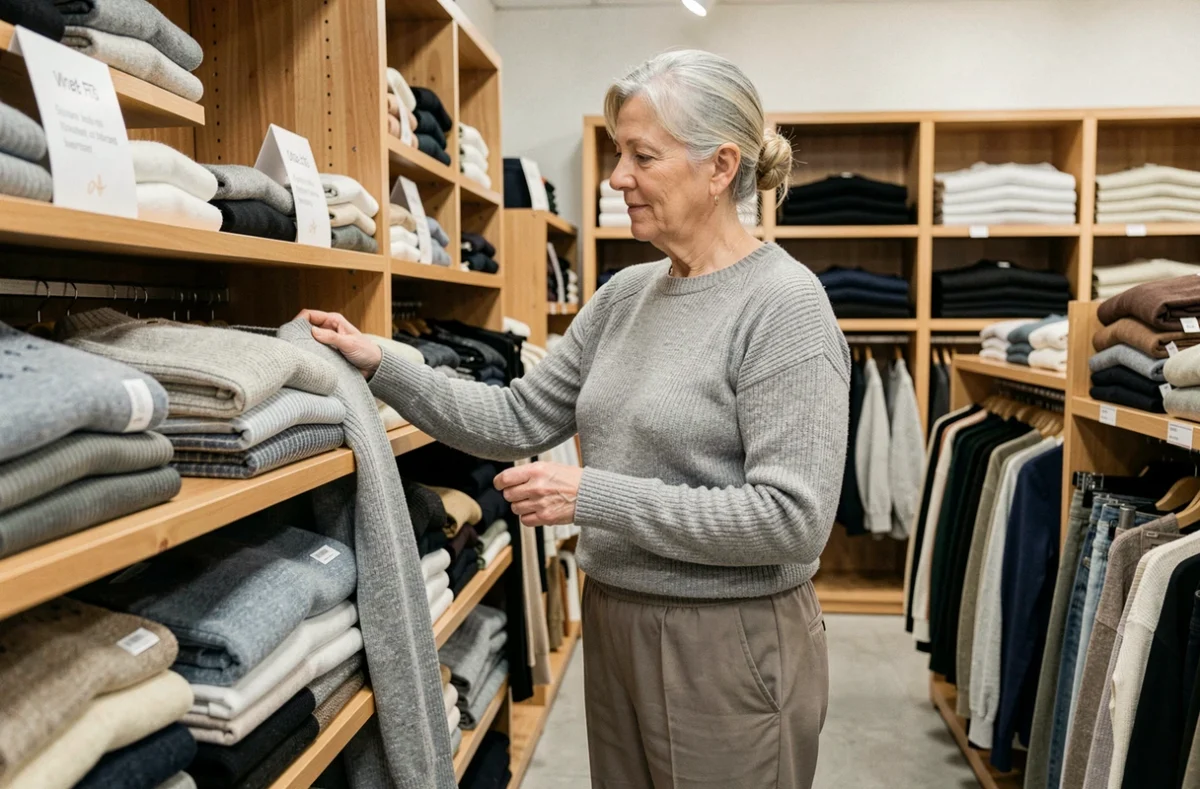
The French market for comfortable, affordable clothing is not dominated by a single retailer. With its Thermolactyl range and network of stores, Damart has a long-standing place in thermal clothing. Several brands target the same market, each taking a different approach to comfort, fabrics and pricing. Comparing these alternatives means looking beyond the catalogues and considering how the clothes perform in real-world use.
Thermal comfort versus fabric comfort: what the tests reveal
A “comfortable” garment can mean two different things. The first is the warmth provided by the fabric, typically Damart’s territory with its technical base layers. The second refers to feel, softness and fit—areas where general retailers perform well without any specific thermal technology.
A comparative test by 60 Millions de consommateurs highlighted a point that is often overlooked: a cheaper model is not necessarily as warm. Performance varies depending on whether the garment is worn at rest, while walking or during more intense exercise such as cycling. A T-shirt that feels pleasant for everyday wear can become uncomfortable during physical activity if it does not manage moisture well.
This distinction between sedentary and active use changes the comparison. If you are looking for a base layer for winter sports, the criteria are different from those for a top worn at home or on a walk. Among cheaper alternatives to Damart, some are better suited to one use or the other, but rarely both equally well.

Kiabi, Blancheporte, Uniqlo: three price points to consider
Kiabi focuses on volume and low prices. Its cotton basics and synthetic knitwear are among the cheapest on the French market. Comfort comes from relaxed fits and soft fabrics, with no technical claims. For everyday wear without exposure to the cold, its range is a solid choice.
Blancheporte, a mail-order specialist, offers thermal garments that come closer to Damart’s positioning. However, the 60 Millions de consommateurs test points out a detail rarely mentioned in catalogues: the price of a Blancheporte thermal T-shirt increases above size 44. This surcharge on larger sizes changes the calculation for some customers.
Uniqlo’s Heattech range uses synthetic fabrics that generate warmth when they come into contact with body moisture. Its value for money is often held up as a benchmark, but regular users debate how well the fibres hold up over several seasons.
What the price doesn’t tell you about lifespan
Cheap synthetic fibres can stretch, pill or lose their insulating properties after repeated washing. The cost per season of use matters just as much as the purchase price. An item that costs twice as much but lasts for three winters works out cheaper than a model replaced every year.
Natural or synthetic fabrics: the real comfort-versus-price trade-off
Damart has built its reputation on patented synthetic fibres. Alternatives that focus on organic cotton, linen or merino wool occupy a different market. Cyrillus, Comptoir des Cotonniers and French-made brands such as Le Minor offer natural fabrics at significantly higher price points.
- Organic cotton feels soft and is gentle on the skin, but its thermal properties are limited without a technical lining. Prices start higher than at fast-fashion retailers.
- Merino wool naturally regulates temperature and manages moisture well. It works for both resting and moderate exercise, but remains considerably more expensive than synthetic fibres.
- Synthetic fibres (polyester, acrylic, elastane) help keep prices low while providing thermal properties. The trade-offs are breathability and environmental impact.
The choice between natural and synthetic fabrics depends on your main priority: technical warmth, everyday softness or environmental responsibility. No option ticks every box at a low price.

Distribution and availability: Damart beyond its stores
Damart has gradually expanded its distribution beyond its own stores. This makes the brand more accessible to shoppers who do not visit Damart stores or order online.
However, the range available in-store is more limited than the full collection in Damart stores. The products stocked by supermarkets are the best-selling styles, not the entire range. Those looking for specific fits or less common sizes still need to visit the website or a store.
This distribution strategy changes how Damart compares with its competitors. Kiabi and Blancheporte were already available through their own networks or online. Uniqlo relies on its city-centre stores and website. By appearing on the same shelves as supermarket own brands, Damart brings the competition directly into the weekly shopping basket.
Compare like for like
Online comparison sites rarely show the same products across all sizes and colours. A price listed for a standard size may not match the price of a larger size from the same manufacturer. Before choosing between two brands, checking the actual price for your size and intended use (everyday wear, walking or sport) is still the most reliable approach.
The affordable comfort clothing market is shaped by very different strategies: patented thermal technology, high volume and rock-bottom prices, premium natural fabrics or wider distribution. No brand leads across all these areas at once. The best choice depends on what you expect from the garment, not the logo sewn onto it.