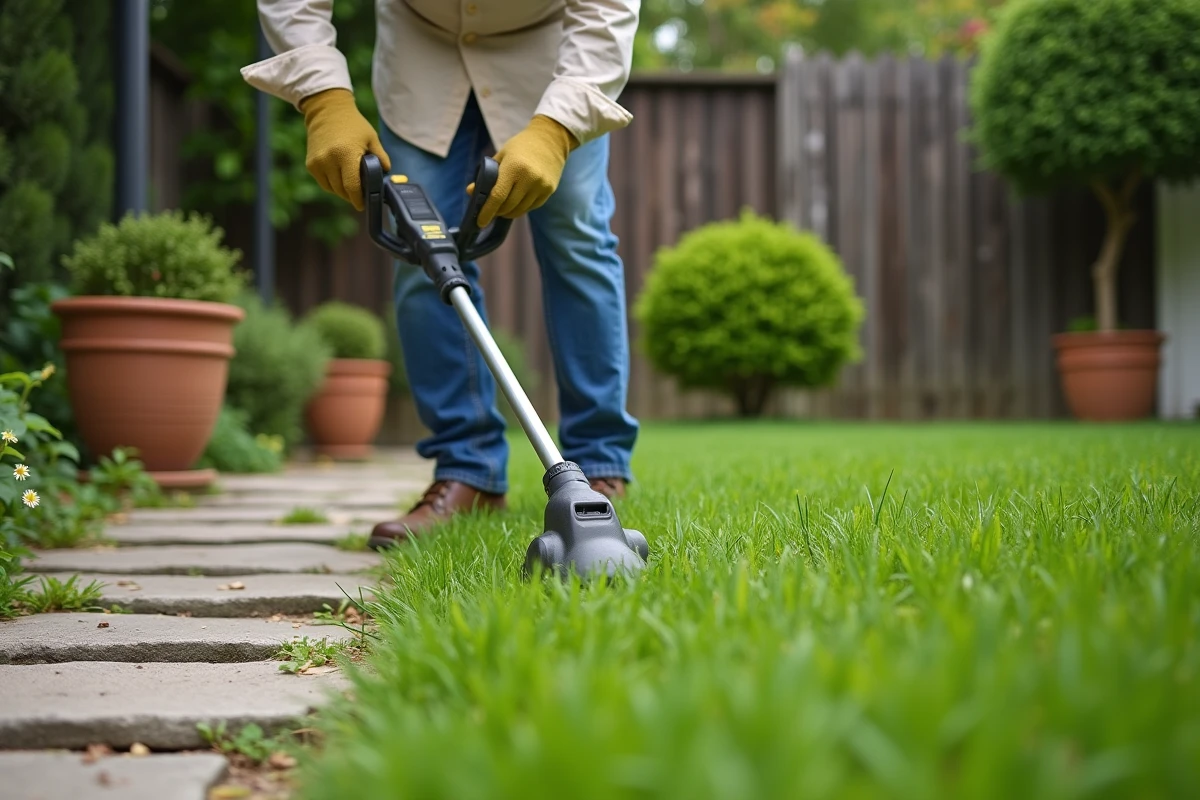
The string trimmer remains one of the most purchased gardening tools in France, across all brands. However, choosing an appropriate model depends on parameters that product sheets do not always highlight: the type of vegetation to be cut, the terrain configuration, and recently, local regulatory constraints on noise.
Noise Regulation and Gas String Trimmers: A Determining Factor
Since 2023-2024, several French municipalities have tightened their municipal orders regarding motorized gardening equipment. Paris, Lyon, and Bordeaux, among others, limit the time slots for using noisy gas-powered machines, including gas string trimmers.
Wired and battery-powered electric models, which are significantly quieter, remain permitted during broader time slots. This changes the game for anyone living in a dense urban or suburban area. Before even comparing power or cutting widths, checking the municipal order of your commune can prevent an unnecessary fine.
For gardens located in subdivisions or condominiums, the internal regulations may impose additional restrictions. A powerful gas string trimmer then becomes unusable for half the weekend, which mechanically steers users towards electric models. Detailed comparisons available on taille-bordure-warrior.com allow filtering models based on this noise nuisance criterion, which is rarely highlighted elsewhere.

Cutting Line and Microplastics: An Underestimated Environmental Angle
Traditional nylon cutting lines fragment with each use. These micro-fragments disperse into the grass, soil, and flower beds. This issue is not trivial: the dispersion of microplastics from nylon cutting lines is documented by several European manufacturers in their environmental communications.
Since 2022-2024, biodegradable or bio-based lines (made from corn starch or compostable polymers) have appeared on the European market. Their product sheets promise natural degradation without persistent residues.
Field feedback on this point varies. Some users report faster wear of the bio-based line, especially on thick grasses or woody weeds. Others find comparable performance to nylon on soft grass. The choice thus depends on the dominant type of vegetation in the garden:
- Fine grass and path edges: the bio-based line performs well without notable loss of performance, and reduces residual soil pollution
- Dense grasses, fine brambles, or semi-woody vegetation: the reinforced nylon line remains more reliable, but an appropriate diameter (round or serrated) is as important as the material
- Mixed areas with nearby flower beds: prefer a thin round line to limit projections and damage to ornamental plants
Entry-Level Battery: Why Real Autonomy is a Problem
Battery-powered string trimmers dominate the consumer market. The promise is appealing: freedom of movement, relative silence, no electric cord to manage. However, entry-level models quickly lose autonomy after a few months of regular use.
This observation recurs in user testimonials on specialized forums and Reddit between 2023 and 2025. The advertised autonomy (often optimistic) sometimes drops by half after a season, especially when the battery is used on dense vegetation or in cold weather.
What Distinguishes a Durable Battery from a Disposable One
Lithium-ion technology is not uniform from one manufacturer to another. Batteries integrated into multi-tool platforms (shareable between string trimmer, hedge trimmer, and blower) are generally of better quality than captive batteries supplied with low-cost devices.
A string trimmer with an interchangeable battery costs more upfront but proves more economical over three to five seasons, because replacing just the battery is possible. On a model with a non-replaceable integrated battery, the end of the battery’s life means the end of the tool’s life.
Cutting Width and Power: Adapting the Tool to the Terrain, Not the Other Way Around
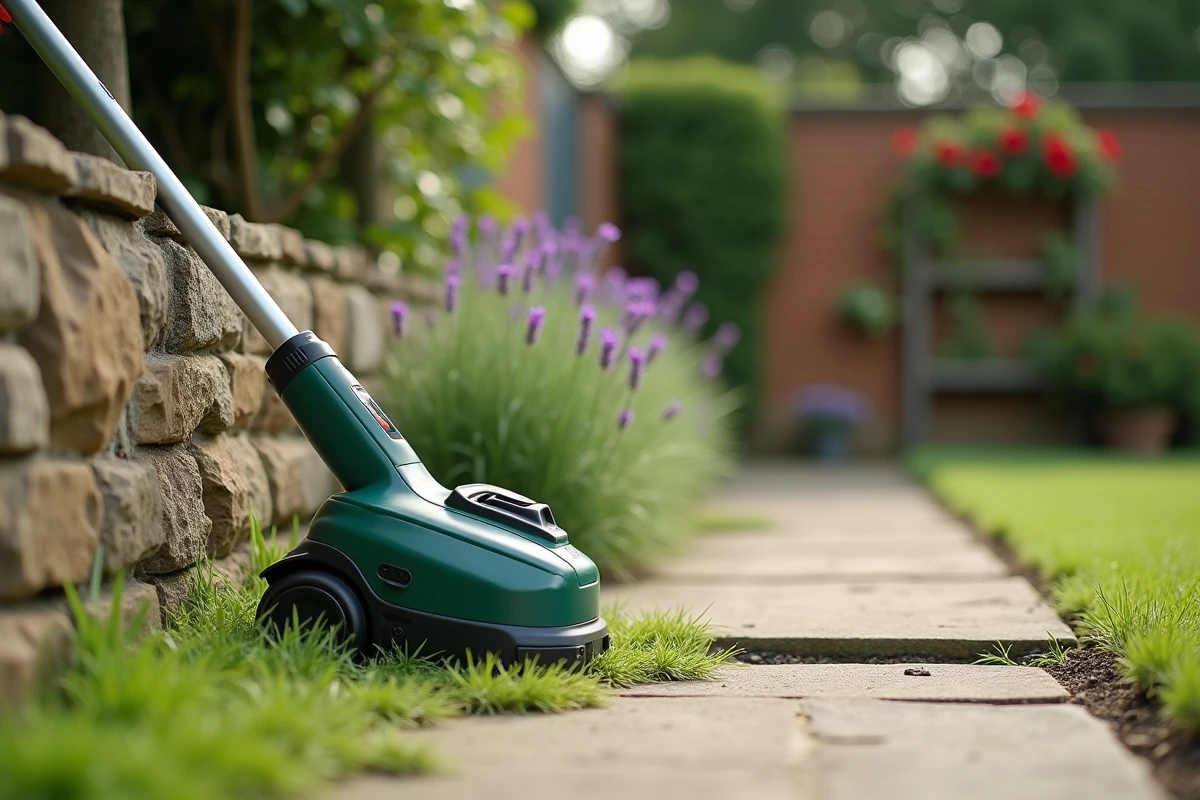
The cutting width determines the area treated with each pass. A model with a generous width speeds up work on large expanses of grass. Conversely, a compact head offers more precision along walls, tree bases, or in narrow flower beds.
The power of the motor should correspond to the nature of the vegetation. Regularly maintained grass does not require the same energy as a border overrun with tall grasses or woody regrowth.
- Small urban garden with soft grass: a low-power wired electric model is sufficient, with a modest cutting width for precision
- Medium-sized garden with varied borders: a mid-range battery model with a swiveling head and telescopic handle offers the best compromise between maneuverability and autonomy
- Large area with dense vegetation: gas remains relevant if local regulations allow it, due to its power and endurance without battery limits
Ergonomics and Weight: The Overlooked Factor in Comparisons
A lightweight string trimmer does not fatigue the arms or back during extended sessions. The weight of the device directly influences the quality of the finishes, because a tool that is too heavy encourages the user to rush the last few meters. Models equipped with a harness or a secondary handle distribute the load better, a detail that makes a difference beyond twenty minutes of continuous use.
The eco-designed ranges launched or reinforced since 2023 by several French brands (Castorama, Leroy Merlin, Mr.Bricolage) sometimes incorporate recycled plastics into the casing and handle. These models meet the requirements of the AGEC law on waste reduction, without compromising the robustness of the whole.
Ultimately, the choice of a string trimmer comes down to three concrete considerations: the noise regulation of your commune, the actual durability of the battery if you opt for cordless, and the nature of the vegetation to be treated. A model well-suited to these three criteria lasts several seasons and makes each finishing session quick rather than frustrating.